

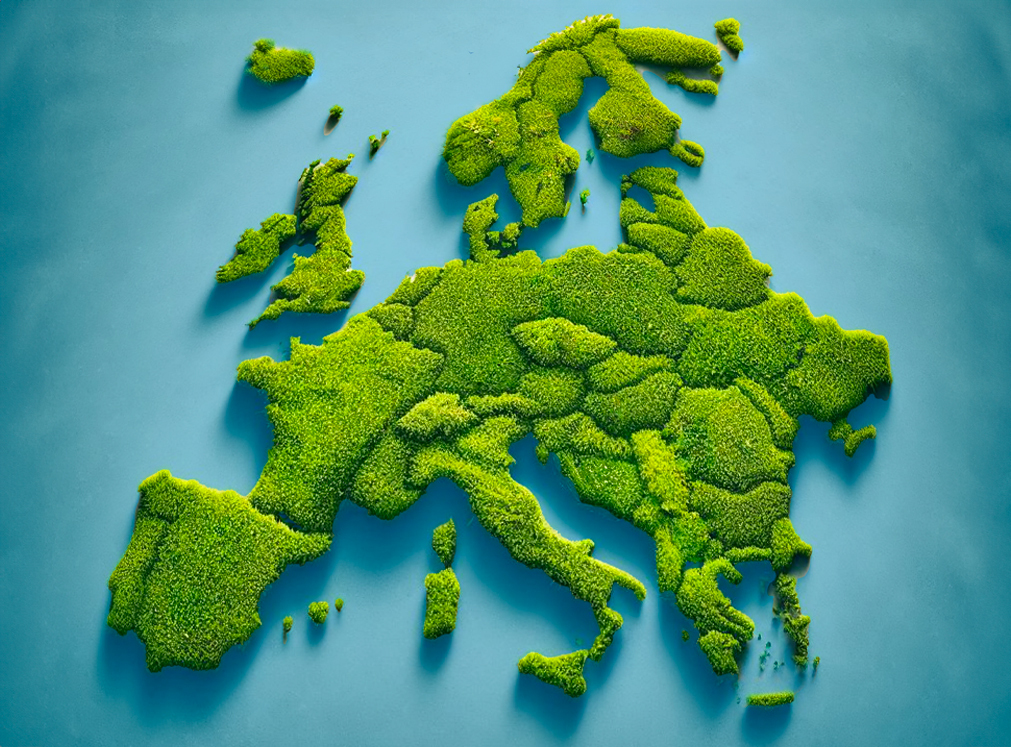
Waste recovery from a European perspective
Waste recovery from a European perspective
Recovery, recycling and reuse are some of the key words at the centre of the European Commission’s reflections in recent years, which has made the circular economy as a fundamental pillar of its strategy for a sustainable future.
Ursula von der Leyen, President of the European Commission, has reiterated on several occasions the need for a “continuous shift towards a more sustainable production and consumption model, preserving the value of resources in our economy for longer”. In this context, it becomes crucial to accelerate the transition process towards greater circularity, through targeted policies and solutions that promote the recovery of materials from waste.
The linear “production-consumption-disposal” model is no longer sustainable. The growing demand for raw materials and the difficulties related to their supply urgently require the adoption of solutions that aim at maximum recovery and reuse of existing resources.
This is a challenge that the Gruppo Esposito has long embraced, with the design of waste treatment and recovery plants – with particular reference to street sweeping and beached waste – which offer concrete evolutionary prospects in the context of the circular economy.
Those of the Gruppo Esposito are technologies that resonate as true pillars of this transition. Because one of the key points of the circular model lies in the ability to effectively manage waste, reducing its disposal in landfills and increasing the recovery of useful materials.
This vision is in line with the European strategy and represents a model to follow for the future development of the sector.
In fact, investing in the design and construction of waste recovery plants can not only contribute to achieving the ambitious European environmental objectives, but also represents an opportunity to create jobs and encourage the development of new industrial sectors.
The path to follow is clear: reduce waste, recover resources and create an economic system that maximizes the value of each material. To achieve this goal, both specific European directives and the ability of organizations and administrations to respond with innovative and sustainable solutions will be essential. The circular economy is no longer just an option, but a necessity to ensure a more sustainable future.